
Stay Safe and Compliant with a Professional Inspection
An electrical safety inspection is a full health check for the wiring and equipment in your home or business. A qualified electrician looks at how your system has been installed, how it is being used, and how safely it is performing. The aim is simple: to spot risks early, confirm that everything meets current standards, and keep people and property safe.
For households, landlords and businesses across Hampshire, Surrey, Berkshire, London and Buckinghamshire, regular inspections are not just a good idea, they help you stay on the right side of UK regulations. Skipping them can leave hidden faults sitting in the background. These can grow into serious issues like fire risks, electric shock hazards or damage to expensive equipment.
Problems found after an incident can also affect insurance claims or mean a property is not compliant with what is expected. When a qualified, NICEIC approved electrician carries out your electrical safety inspection, you gain clear answers instead of guesswork and the peace of mind that your system has been checked against recognised standards.
Preparing for Your Electrical Safety Inspection Visit
A bit of preparation before the visit makes the inspection smoother and quicker. It also helps your electrician see the full picture of how your system has been used and changed over time.
Useful steps to take include:
- Clear easy access to the consumer unit or fuse board
- Move furniture away from key sockets and switches where possible
- Make sure plant rooms, stores and outbuildings are unlocked
- Point out any fixed equipment that must not be switched off
Any information you can share is helpful. For example, you might tell the electrician:
- How old the electrical installation is, if you know
- Whether you have had an inspection report done in the past
- If you have had issues like tripping circuits, buzzing accessories or flickering lights
- Any recent changes, such as new showers, kitchen refits or added machinery
For commercial and industrial sites, timing the inspection can reduce disruption. Many businesses plan testing during quieter trading hours, scheduled shutdowns or staff changeovers so production or customer service is not affected. Early spring is often a good time to book, before heavier summer use of AC units, garden equipment and outdoor lighting places more demand on the system.
What Your Electrician Checks Room by Room
Once on site, your electrician usually starts with a visual inspection. This is a careful look round the property, room by room, to spot any obvious damage, age-related wear or signs of poor work.
Common checks include:
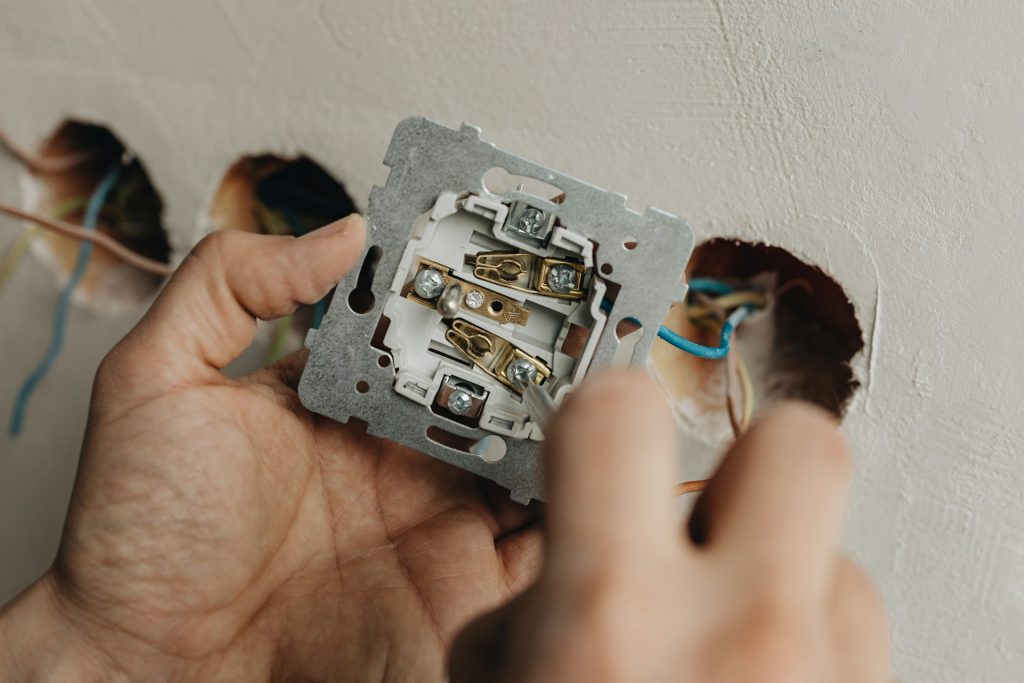
- Condition of sockets, switches and light fittings
- Signs of overheating, such as discolouration or scorching
- Secure fixing and correct labelling of the consumer unit
- Visible cabling that looks damaged, loose or poorly supported
- Presence and condition of RCD protection where it is needed
In domestic homes, the focus is often on everyday use areas. Kitchens, bathrooms and utility rooms see lots of moisture and heavy use, so they are looked at very closely. Outdoor circuits feeding garden lighting, garages, sheds or EV charge points also get special attention, since water and weather can speed up wear.
In commercial and industrial settings, there are extra layers. Your electrician may check:
- Distribution boards supplying different parts of the building
- Three-phase supplies feeding machinery, lifts or large AC units
- Emergency lighting and exit signs
- Fixed equipment like commercial ovens, compressors or pumps
- Power to IT rooms, plant areas and external lighting columns
All of this helps build a clear picture of how safely the system is installed and whether it is suitable for the way the building is used.
Testing, Reporting and Your Final Safety Rating
After the visual checks, the testing phase begins. This is more technical, but the aim is still straightforward: to confirm that the wiring and safety devices work as they should.
Common tests include:
- Continuity tests, to check that wires are correctly connected all the way along a circuit
- Insulation resistance tests, to make sure electricity is not leaking between wires or to earth
- RCD tests, to confirm that these safety devices trip fast enough if a fault occurs
- Earth-fault loop impedance checks, to see that the system will disconnect quickly in a fault
Some of these tests need circuits to be switched off for short periods, which your electrician will explain before starting.
Findings are then recorded clearly. Any issues are coded so you can see how urgent they are. This might range from items that need immediate attention, to points that are safe for now but should be improved or monitored. Photos are often taken of faults or areas of concern, which makes it easier to understand what is happening behind the technical terms.
At the end, you receive an Electrical Installation Condition Report, often called an EICR, or another type of inspection document where appropriate. This sets out:
- An overall assessment of your installation
- A list of observations, with simple explanations
- A clear set of recommendations, prioritised by risk
This report becomes your record that an inspection has taken place and gives you a plan for any follow-up work.
Fixing Issues and Planning Future Upgrades
Once you know the condition of your system, the next step is putting things right. Electricians from John Carpenter Electrical can carry out repairs highlighted in the inspection, from replacing cracked or loose sockets to upgrading older consumer units and, where needed, completing partial or full rewires.
An inspection visit can also be a good time to think about improving how your property uses electricity. For example, you might want to:
- Change to LED lighting for lower energy use and less heat
- Add surge protection to protect sensitive equipment
- Install EV charge points in a safe, planned way
- Prepare wiring so you are ready for future renewable options
For landlords and businesses, regular inspections form part of a long term maintenance plan. By checking the system at agreed intervals, you can spread upgrade work over time, plan downtime instead of suffering surprise outages, and keep records that show your site is being managed safely. Homeowners also benefit from this planned approach, catching small issues before they grow into big problems.
Book Your Electrical Safety Inspection with Confidence
As the weather warms up, many properties start using more power for AC units, garden tools, outdoor lighting and leisure equipment. Any weak points in your system are more likely to show at this stage. An electrical safety inspection carried out before that extra load arrives can help you avoid nuisance tripping, damage to appliances or more serious faults.
John Carpenter Electrical provides domestic, commercial and industrial inspection services across Hampshire, Surrey, Berkshire, London and Buckinghamshire. Our qualified, experienced, NICEIC approved electricians focus on clear communication, careful work and honest, straightforward reporting so you know exactly where you stand and what needs to happen next to keep your property safe.
Protect Your Property With A Professional Safety Check
If you are unsure whether your electrics are up to standard, we can provide a thorough electrical safety inspection to identify issues before they become costly or dangerous. At John Carpenter Electrical, we work carefully around your schedule to minimise disruption while keeping your home or business safe and compliant. To arrange a visit or request a quote, simply contact us and we will be in touch promptly.
